Hope is rarely treated as something dangerous. Across literature, religion, and philosophy, it is often imagined as the force that enables human beings to endure suffering and imagine a life beyond it. Stories, too, depend upon this assumption. We continue reading because we believe that something might change: the detective may solve the crime, the lovers may reunite, the monster may be defeated. Hope gives narratives their momentum by orienting them toward a future that remains possible.
This is what makes From, an American science fiction, horror television series created by John Griffin, so philosophically unsettling. The series follows the residents of a small town who find themselves unable to leave while mysterious forces govern the world around them. By night, human-like creatures emerge from the forest; by day, the town struggles to preserve some semblance of order as its residents search for a way home. Yet beneath its supernatural premise lies a more disturbing question. Rather than asking how people survive monsters, From asks what happens when the very thing that usually sustains survival, hope, becomes another instrument of horror.
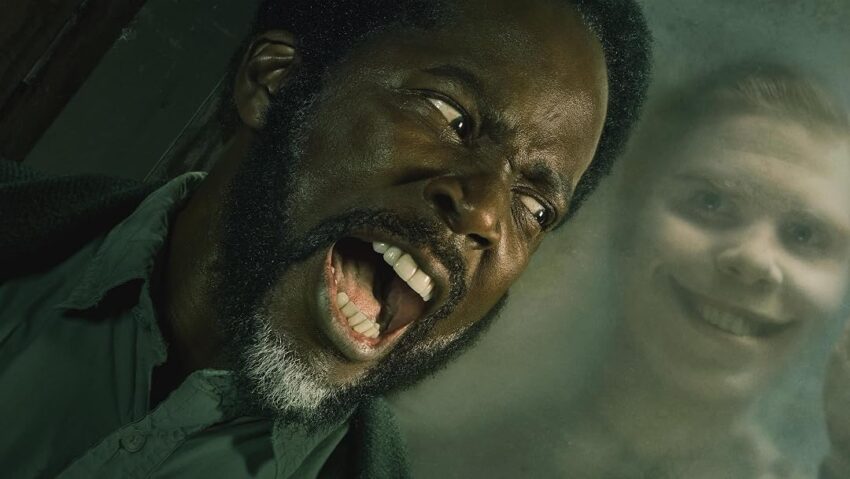
There is a quote in this show that caught my attention. “It wants you to fight. It wants you to have hope that you could actually win! Because hope is what makes you willing to suffer. Hope is what sent you into the woods that day. Hope is what made you leave me alone when I needed you the most. It’s not your fear that feeds the forest, Boyd. It’s hope.”
Hope occupies a peculiar place in horror because it is both structurally necessary and emotionally dangerous. Unlike tragedies, where we anticipate an inevitable downfall, horror depends on the persistent possibility that the characters might survive. That possibility does not have to be probable, but it has to remain imaginable. In this sense, hope is one of horror’s most important narrative engines.
From takes this narrative convention and deliberately turns it against both its characters and its viewers. Rather than presenting hope as the force that resists horror, the show gradually suggests that hope itself has become one of horror’s mechanisms. This brings me to Friedrich Nietzsche’s analysis of the Pandora myth in Human, All Too Human, where he views hope not as a blessing but as the ultimate evil. So, Pandora brought the box containing evils and opened it.
Nietzsche argued that Zeus trapped hope inside the box to keep humans alive so he could torment them, making hope a tool for prolonged suffering. Nietzsche believed that instead of relying on the false comforts of hope or expecting a better future, humans should have the courage to face reality and embrace their present life. The people of this unnamed town in From, seem to be living that way. When their reality is altered beyond human comprehension, they are left with two choices: either bend or break. At first, the idea of going home does not even exist as a possibility. It is only much later, when they begin trying to make contact with the outside world, that hope starts to bloom.
In his view, hope prolongs suffering because if a person fully recognised the permanence of their misery, they might reject their condition, change it radically, or even abandon life altogether. Hope prevents this. It whispers that tomorrow will be better, that relief is just around the corner, that enduring today’s pain will eventually be rewarded. For Nietzsche, this is precisely Zeus’s strategy. Zeus does not want humanity to escape its misery. Instead, he wants people to continue living under it. Hope becomes the psychological mechanism that keeps them going.
This is precisely the psychological pattern that begins to emerge in From. For much of the first season, the residents do not actively pursue escape because they have accepted survival as their primary task. It is only once the possibility of answers begins to appear, through the radio tower, the forest, and Boyd’s expeditions; that suffering acquires a future orientation. They no longer merely endure; they begin investing themselves in the promise that understanding is just one discovery away.
The irony lies in the pandora box itself. Human beings treasure it because they mistake hope for happiness. Every time they open it, expecting comfort, they reach for the very thing that keeps them bound to their suffering. The “gift” from the gods is therefore not compassion but a subtle form of control. Zeus does not conquer humanity through force; he ensures that people willingly continue enduring their own misery because hope persuades them that enduring it is worthwhile.
Ultimately, Nietzsche transforms Pandora’s myth into a critique of the human need for comforting illusions. The greatest danger is not suffering itself but the beliefs that make suffering endlessly acceptable. Hope, in this interpretation, is dangerous because it delays confrontation with reality, encourages endurance over transformation, and stretches human suffering across an entire lifetime rather than allowing it to reach its natural conclusion.
From is not simply saying “hope is dangerous.” It is quietly overturning one of the oldest religious ideas in the Western tradition: that hope is a virtue. The power of the show’s line comes from the fact that it feels almost heretical. For thousands of years, hope has generally been understood as something that sustains human beings through suffering. From asks whether that very mechanism of endurance can become the thing that keeps suffering alive. In Christianity, hope is not merely optimism. It is one of the three theological virtues alongside faith and charity (love). This idea is drawn from the New Testament, particularly 1 Corinthians 13:13:
“And now these three remain: faith, hope and love. But the greatest of these is love.”
With hope, suffering becomes temporary. That logic appears everywhere in religious narratives.
The world of From proposes something radically different. It suggests that this very orientation toward the future is precisely what the forest exploits. The forest does not merely trap people physically. It traps them psychologically by allowing them to believe that escape remains possible. Every clue, every strange vision, every mysterious symbol, and every expedition into the woods becomes another investment in the possibility that understanding is just around the corner. The characters continue risking themselves because they believe the next answer will finally lead them home. Hope becomes the mechanism that keeps them participating in the game.
This is why the line, “It wants you to have hope,” is so disturbing. The statement implies that hope is not the opposite of the forest’s power but one of its instruments. We instinctively assume that monsters thrive on fear because fear immobilises people. Fear makes us hide, panic, and surrender. Yet the show argues for the exact opposite. Fear alone cannot sustain the system because fear eventually produces resignation. A terrified person may stop trying altogether. Hope, however, produces action. It persuades people to keep walking into the forest, to keep searching for explanations, to keep making sacrifices because this attempt might be the one that succeeds. Rather than escaping the trap, their hope continually renews their participation in it.
What makes this idea philosophically interesting is that the forest does not appear to manufacture hope out of nothing. The desire to survive, to return home, to believe that suffering has an end, already exists within the characters. These are recognisably human impulses. The forest merely redirects them. In that sense, the show is not presenting hope as evil in itself. It is presenting hope as something that can be manipulated. The very quality that ordinarily enables human resilience becomes the point through which the characters are controlled. Their greatest strength becomes their greatest vulnerability.
What the show ultimately challenges, then, is not the value of hope itself but our assumption that hope always liberates. It asks whether hope can sometimes function less as an escape from suffering and more as the reason suffering continues. That possibility is what makes the line linger long after the episode ends. It transforms hope from a comforting virtue into an unsettling philosophical question: if the future continually promises release but never delivers it, does hope still sustain us, or does it become another form of captivity?
Yet this interpretation is not the only way of understanding hope. If Nietzsche sees hope as the mechanism that prolongs suffering, another philosophical tradition suggests that hope—or more precisely, meaning—may be the very thing that allows human beings to survive suffering.
If Nietzsche treats hope as the force that prolongs suffering, Viktor Frankl offers almost the opposite conclusion. Having survived the Nazi concentration camps, Frankl argued in Man’s Search for Meaning that what enables human beings to endure extreme suffering is not the expectation that circumstances will improve, but the conviction that life retains meaning even when suffering cannot be avoided. He describes this as the “will to meaning”— the fundamental human drive to find purpose in existence. Hope, in this sense, is not simply optimism about the future. It is the ability to locate significance in the present, even when the future remains uncertain.
This distinction becomes important when thinking about From. The series does not portray every form of hope as equally dangerous. The hope that repeatedly places the characters in danger is future-oriented: the belief that the next expedition, the next clue, or the next strange symbol will finally reveal the way home. Boyd embodies this impulse. Each attempt to understand the forest is driven by the belief that answers lie just beyond the next discovery. Hope becomes inseparable from expectation. The characters continue risking themselves because they believe that understanding is always just one step away.
Yet other characters survive for reasons that resemble Frankl’s philosophy more closely. Ethan, despite being surrounded by incomprehensible horror, interprets the town as though he were living inside a quest. Rather than allowing chaos to strip the world of meaning, he constructs a narrative that gives every event a purpose. His language of heroes, quests, and responsibilities is not merely childish imagination; it is a way of making reality psychologically inhabitable. Whether his interpretation is objectively true matters less than the fact that it enables him to continue living within an otherwise unbearable world.
The same principle can be seen in the adults who assume responsibility for others. Their survival is sustained less by confidence that escape is imminent than by the meaning they derive from protecting the community, maintaining routines, and preserving some form of social order. In Frankl’s terms, they are not surviving because they are certain the future will improve. They are surviving because their actions continue to matter in the present.
Seen through this contrast, From does not simply declare that hope is dangerous. Instead, it distinguishes between two fundamentally different kinds of hope. One is hope as expectation: a continual investment in a future that promises release but never arrives. This is the form of hope that the forest appears to exploit, drawing people ever deeper into its mysteries by convincing them that the next answer will finally set them free. The other is hope grounded in meaning: the decision to continue living, caring, and taking responsibility even when no promise of escape exists.
If Nietzsche warns us about the dangers of hope as illusion, Frankl reminds us that without meaning, suffering becomes almost impossible to bear. From seems to place its characters somewhere between these two philosophies, asking not whether hope is good or bad, but what kind of hope allows people to survive without becoming trapped by it.
Whether hope is understood as illusion, virtue, or a source of meaning, each of these perspectives shares one assumption: hope shapes how human beings endure uncertainty. Yet literature allows us to ask a different question. Rather than asking whether hope is morally good or psychologically necessary, we can ask what hope actually does within a story. Hope is not only an emotion experienced by characters; it is also a structural principle that governs narrative itself. It directs attention toward the future, persuading both characters and readers that what lies ahead may alter the meaning of everything that has come before. In this sense, hope is not simply a theme that stories explore. It is one of the mechanisms through which stories keep us invested in their unfolding.
This is where From becomes particularly interesting. The series does not merely present hope as an idea to be debated through philosophy or religion. It embeds hope into the very architecture of its narrative. Every unexplained symbol, every cryptic vision, every expedition into the forest, and every fragment of new information invites both the characters and the audience to believe that understanding is finally within reach. The same hope that propels the residents of the town forward also sustains the viewer’s belief that the next episode will provide the answers. The question, then, is no longer whether hope helps people survive. It is whether hope itself has become the mechanism through which the story keeps everyone, characters and audience alike, trapped within its mystery.
This creates a profound inversion of the moral structure we usually expect from stories. In most narratives, hope is rewarded. The hero persists because they refuse to give up, and eventually that perseverance leads to victory. Hope and survival reinforce one another. From refuses to offer that reassurance. Instead, it asks whether hope can become a self-perpetuating cycle in which every failure only produces another attempt, every disappointment generates another theory, and every unanswered question strengthens the belief that the next answer must finally be the right one. The characters are not merely trapped in a place; they are trapped in a pattern of expectation.
Hope, in this sense, is not merely emotional; it is epistemological. It persuades us that knowledge exists somewhere within the narrative and that continued attention will eventually uncover it. The audience are drawn in because they expect coherence, even when the fictional world itself appears chaotic.
From exploits this expectation in an unusually sophisticated way. Like most mystery narratives, it continually introduces new clues. The narrative teaches us to interpret information as progress. We instinctively assume that mysteries accumulate in order to be solved.
Yet the show gradually begins to undermine this assumption. Each answer produces additional questions. Every apparent breakthrough opens another layer of uncertainty. Rather than reducing mystery, the accumulation of knowledge often expands it. As a result, hope no longer functions as a pathway toward resolution. Instead, it becomes the mechanism that keeps everyone searching despite the absence of meaningful progress.
What makes this particularly interesting from a literary perspective is that the show appears to manipulate the audience using precisely the same psychological mechanism that operates within the story. We are not merely observing their hope; we are participating in it.
This transforms the role of the antagonist in subtle but significant ways. At first, the monsters appear to occupy that position. They represent the obvious external threat, the visible source of danger that the characters must survive. As the series progresses, however, the monsters become almost secondary to the town itself. The real conflict shifts from escaping individual creatures to understanding an entire system that refuses explanation. By the time the audience encounters the idea that “the forest feeds on hope,” the antagonist undergoes another transformation. The greatest obstacle is no longer simply the monsters or even the town. It is the characters’ own relationship to hope. The emotion that ordinarily drives protagonists toward victory becomes one of the forces sustaining the very structure they seek to escape.
This is an unusual inversion of conventional narrative logic. In most stories, hope and narrative progress move together. Hope functions as evidence that the story is advancing toward resolution. From disrupts that relationship.
Perhaps this is why the line “It’s not your fear that feeds the forest. It’s hope.” resonates so deeply. It is not simply making a philosophical claim about human emotion. It is quietly revealing something about the narrative itself. The show has been sustained by hope from the very beginning, not only the characters’ hope of escaping the town, but the audience’s hope of eventually making sense of it. In that moment, From turns one of storytelling’s oldest engines into one of its most unsettling revelations.
Hope is no longer merely the subject of the story. It has become the method through which the story operates.